Chef Ed Kenney grew up in Honolulu in one of those homes where the door was always open, there was always food for whoever showed up, and where the kids would naturally congregate. His parents were entertainers by profession; his dad is Ed Kenney, a singer and performer in the height of the crooner era in the ‘60s. Bringing people together is what the Kenneys did.
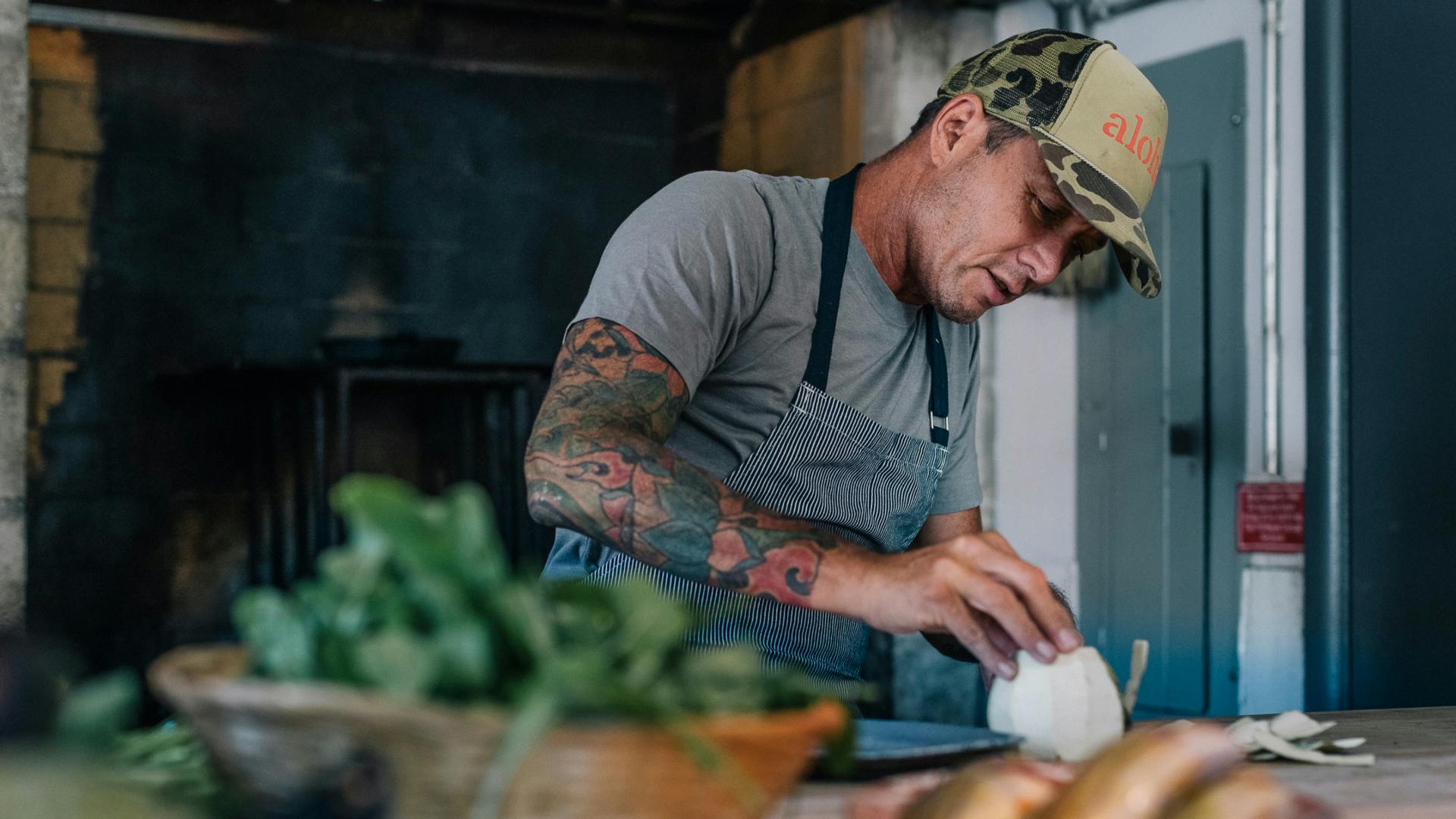
“A lot of chefs open restaurants because they love to cook. I do love to cook, and I love food, but really for me, it's more about the community that a restaurant builds,” Ed shares from behind the counter at his restaurant, Mud Hen Water, in downtown Honolulu. He’s dressing greens he picked up this morning from a farm about an hour away on the other side of the island. He’s also keeping an eye on the cast-iron skillet where he’s roasting breadfruit, or ulu, over the fire. Chef Ed describes his cooking style as that of an old Italian grandma, preparing food really simply and letting the quality ingredients speak for themselves. “Being here in Hawaii where we have 12 months of sunshine, we have the best produce anywhere, and surrounded by ocean, we’ve got the best seafood. When I cook, it’s really about what comes in the back door that day, and doing as little as possible to it,” he says with a smile.
Ed makes it sound straightforward – but using local ingredients in Hawaii is doing something different when over 90% of the food in Hawaii is imported (over 60% of the seafood is imported). While some of them can be attributed to being part of the modern economy, these staggering numbers are also a clear reminder that demand drives supply.
In 2019, Hawaii saw over 10 million visitors. Ed makes a forgiving observation about tourist behavior: He theorizes that after they do an island tour by boat, eat Matsumoto Shave Ice (distinctly Hawaiian, but not locally produced syrup), go to a Shrimp Shack, and do all the Hawaiian things, they want something comfortable. “I think that’s why we have the highest grossing Cheesecake Factory in the world in Waikiki,” he says. They’re willing to be adventurous, but not at every meal, especially when their whole day was filled with the unfamiliar.
But when visitors do decide they want Hawaiian, the thought process tends to be Hawaii = islands = fish. They look for fish on the menu, but often a fish familiar to tourists isn’t a local option. A poke bowl with salmon? Not local. The intention to eat locally is there, which is where the chefs can step in.
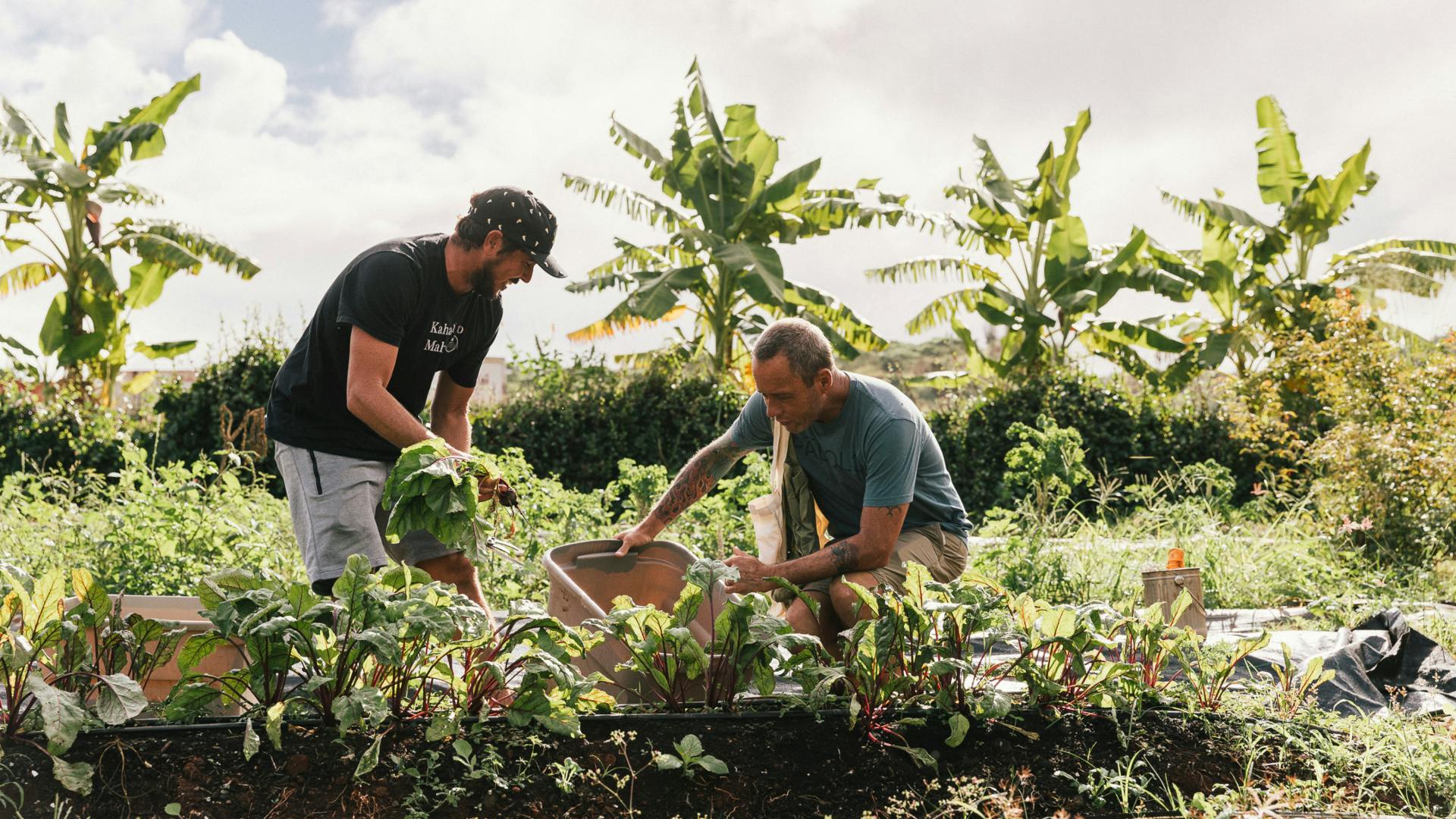
Ed’s advantage as a chef who is beholden to a bigger picture rather than a plated dish allows him to see and solve different problems. Becoming a chef was his second career, and as it started to take shape, he realized something: “As a chef you typically think about what you want to make, then where you’re going to get the ingredients. But that’s all backwards,” he says. “It really should be what ingredients do I have, and what am I going to make with them?”
“Chef Ed is someone I consider a superhero,” says Kimi Werner, a professional spearfisher woman on Oahu. “He is one of the main chefs in Hawaii who started the farm-to-table, sea-to-table movement.” These days, and on the mainland especially, “farm to table” can seem like standard fare. But almost twenty years ago, it was a new concept. With this approach, he came to realize how many underappreciated ingredients in Hawaii he can make use of.


Tundra® 65 Hard Cooler
Shop Now
Through his work with the Monterey Bay Aquarium’s Blue Ribbon Task Force (a handful of chefs around the nation who are committed to sustainable, traceable seafood), Ed learned about invasive species and the culinary community’s role in transforming the seafood industry. He soon discovered that there are three of some of the most destructive species in Hawaiian waters: toau, ta’ape (both are species of snapper), and roi (a type of grouper). These fish were brought into Hawaiian waters in the ‘50s and ‘60s. The oversimplified thinking was they’re reef fish from South Pacific waters, so they’ll do fine. It ended up being a huge mistake.
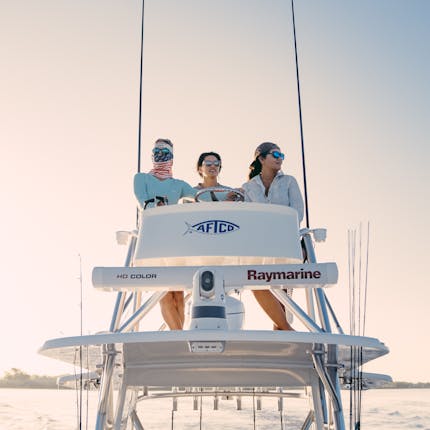
Diving for and spearing fish offers Kimi a unique viewpoint on the problem. “Everywhere from 18 to 100 feet down, I see ta’ape. So long as there’s reef and structure (like caves and cracks), there they are.” Non-native species are considered invasive when they outcompete native species for food and habitat and cause damage to the ecosystem. The thinking is that if we have to do something about them, why not eat them? Afterall, they are a good and nutritious food resource in abundance – it’s a matter of mindset or perception that needs changing. “Ta’ape are an infestation,” Kimi maintains, “but ‘infestation’ doesn’t sound appetizing.”
“I have ta’ape here for us today that Kimi speared for me,” Ed shows us about a half-dozen 8-inch fish that are bright gold with a blue lateral line. “Back when I first tried to get some for the restaurant, the fishermen laughed at me,” Ed recalls. “They're like, ‘What do you want that for? That fish sucks.Nobody wants that.’” Kimi tells us she wishes it was easier to get ta’ape, explaining that despite their incredible abundance, hooking one – or in her case, spearing one – can be frustrating. “They are a very darty fish and they move as a school. I get worked every time, but I don’t run out of fish to try for.”
Despite the perception that it’s a junky fish, ta’ape is no better or worse than red snapper or pink snapper which are more popular in Hawaii, but must be shipped in. Changing this attitude is Ed’s work as a chef – and it’s not just the fish’s bad PR he’s up against, but that consumers have also essentially been trained to want a certain cut of meat. They want filets, not bones and eyeballs staring back at them. Yet serving and eating whole fish in Hawaii is completely culturally accepted, if not preferred. “When I was growing up on Maui we were always eating reef fish, eating them whole, having their heads on, their tails on, just using your fingers or chopsticks and picking the meat right off the bone,” Kimi recalls. It’s how she serves it to her own family today.
“I generally think any meat that's cooked on the bone is tastier, whether it's a steak or fish,” says Ed, setting out a plate of whole fried ta’ape for us. He tells the story of serving the Obamas a few years ago. “I remember we served them a whole fish. We dropped it at his table and Barack was like, ‘Yeah, that's what I'm talking about!’ really excited to see it, and he picked up his chopsticks and dug in.”
Ed’s restaurants have become places where the locals find food that’s familiar (Hawaiian classics on a pedestal, as he likes to put it) and that’s sourced from their home islands and served with great care. And any place that attracts locals naturally draws in the tourists who want to eat like a local. Those who visit Mud Hen Water get authentic local Hawaiian cuisine.
Over the years in his work with the Monterey Bay Aquarium, local farmers, the fishing community, and meat purveyors, and through being a constant in the restaurant scene, Chef Ed has built the relationships all across Hawaii that he sought to foster within the walls of his restaurants. He has a keen understanding of how the food system interlocks with almost every other system, from fuel and transportation, to family and education. And each impacts the environment in some way.
His ultimate goal is that his customers find something they like at his restaurant and then want to make it for themselves. He hopes they’ll go to a market and ask for it, generate a little demand, and share a meal at home with friends and family. That is what is best for Hawaii and the greater global community. But Ed admits, “As a chef and business owner, I guess that’s kind of a self-defeating principle.”