The narrow rope of dirt road clung to a jungle cliff as our Toyota Hilux inched along, trembling at the washboards. Far below, the glacial water of the Drangme Chhu seemed lost. Chalky and seafoam in hue, the river belonged in the high alpine, yet here it was carving a canyon through the rainforest.
I studied it hoping to see fish, which was mostly a wasted effort in water opaque as butter tea — the Bhutanese drink made from fermented yak’s milk. But every so often, a stream would spill in from the jungle, and its clear waters would push aside the curtains of milk to reveal the black stones below.
Sometimes, in the last thin seam of black, just as the curtains billowed shut, I’d catch a glint of metallic yellow. These were golden mahseer, the royal fish of the Kingdom of Bhutan, a species few locals have ever seen but whose likeness is painted in reverence on walls, doorways, and telephone poles throughout the country. Here, every fish belongs to the king, and it’s illegal to fish for any of them.
Though if it were legal, most locals would not. Not in a Buddhist country that prays for all sentient beings. But even if fishing were socially acceptable, Bhutan’s rivers wouldn’t see much action. The rugged terrain, which has proudly kept the kingdom out of the hands of colonizers,
means that just getting to the rivers can take a week of creeping along on washed-out four-wheel-drive trails.
And then, if you do get to the rivers where golden mahseer swim, very little is known about how to fish for them. They’re members of the carp family and likely omnivorous, so you could end up throwing meaty-looking flies to a fish that’s happy munching on plants.
Yet here I was with the king’s permission, seeking to cast a carnivore’s fly to omnivorous fish. Why? Because if they’d just eat, they might be the key to saving the rivers in which they swim.
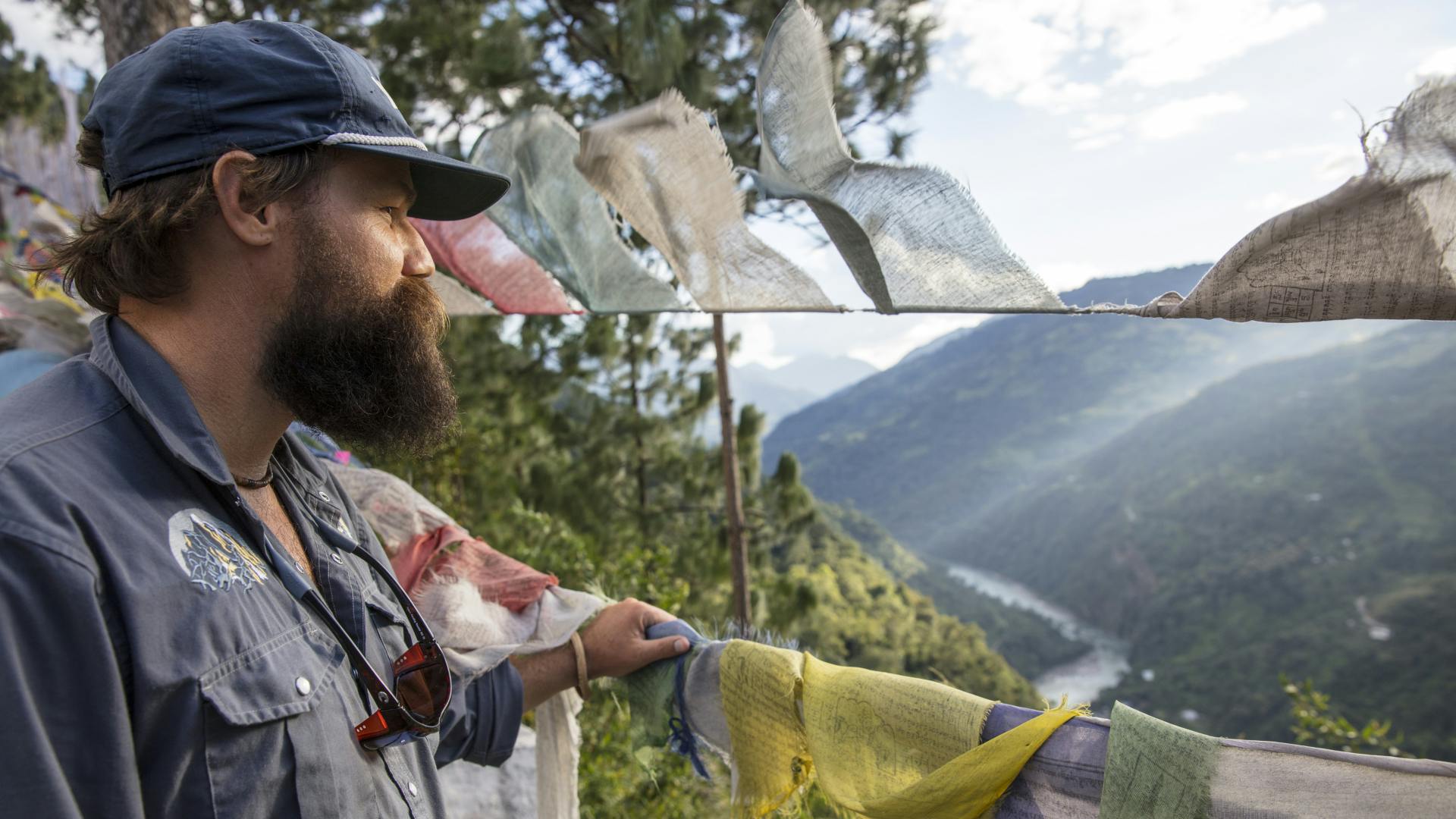
Months before, I’d gotten an email saying the Prince of Bhutan wanted my help. I nearly laughed and hit delete, but he’d heard about some work I did with my nonprofit, Indifly, in a village in Guyana. The villagers were struggling financially, and mining and logging companies had made some very compelling offers.
As a fishing guide turned hedge fund manager turned fly fishing lodge owner, it seemed like I could help. I taught the Guyanese villagers how to guide, they built a lodge, word got out about their arapaima fishing, and soon anglers were arriving from all over the world. Mining and logging would have stripped the land, polluted the water, and killed the fish. But the village and its surroundings were protected through simple economics.
The prince wanted to know if something similar was possible in his kingdom.
Bhutan’s rivers are like nothing I’ve ever seen. In an area about the size of Maryland, the elevation plummets from 24,000 feet to 324 feet. On the northern border, Himalayan peaks groan beneath the weight of glaciers, which melt and rush southward, meandering through subtropical rainforests. These rivers spill over the southern border into India, whose bulging population is ravenous for electricity.
Selling hydropower to India makes up nearly half the kingdom’s export economy. Five dams are operational, six more are under construction, and another five are in various stages of planning. More dams would bring more wealth, but they’d also flood more of the country and destroy more of its riverine ecosystems.
But Bhutan doesn’t measure its success in terms of gross domestic product. Instead, they measure gross domestic happiness. Many Bhuddists define happiness as the freedom of movement without the fear of drowning. And in Tibetan Buddhism, there’s even a sacred symbol for happiness: the golden mahseer, the fish we were now looking for.
So the prince’s economic question was also a spiritual one. Could the very symbol of happiness help keep a kingdom above water?
I didn’t know. What I did know is that if you want to build a fly fishing economy of any size, you need one thing: fishing so good it’s worth flying halfway around the world for. So that’s what I set out to find.
On our third day of overlanding through the jungle, we spotted a large clearwater tributary. I pulled out the binoculars and counted 16 to 20 glimmers the color of saffron and chrome, twisting muscularly in the current.
The prince had sent along as my guide his royal bodyguard, Pema Gyelpo, who for years had guided the royal family on their fishing trips. He spread a map over the hood, scanned it, noted the tributary’s location, and said it was half a day’s float from the put-in.
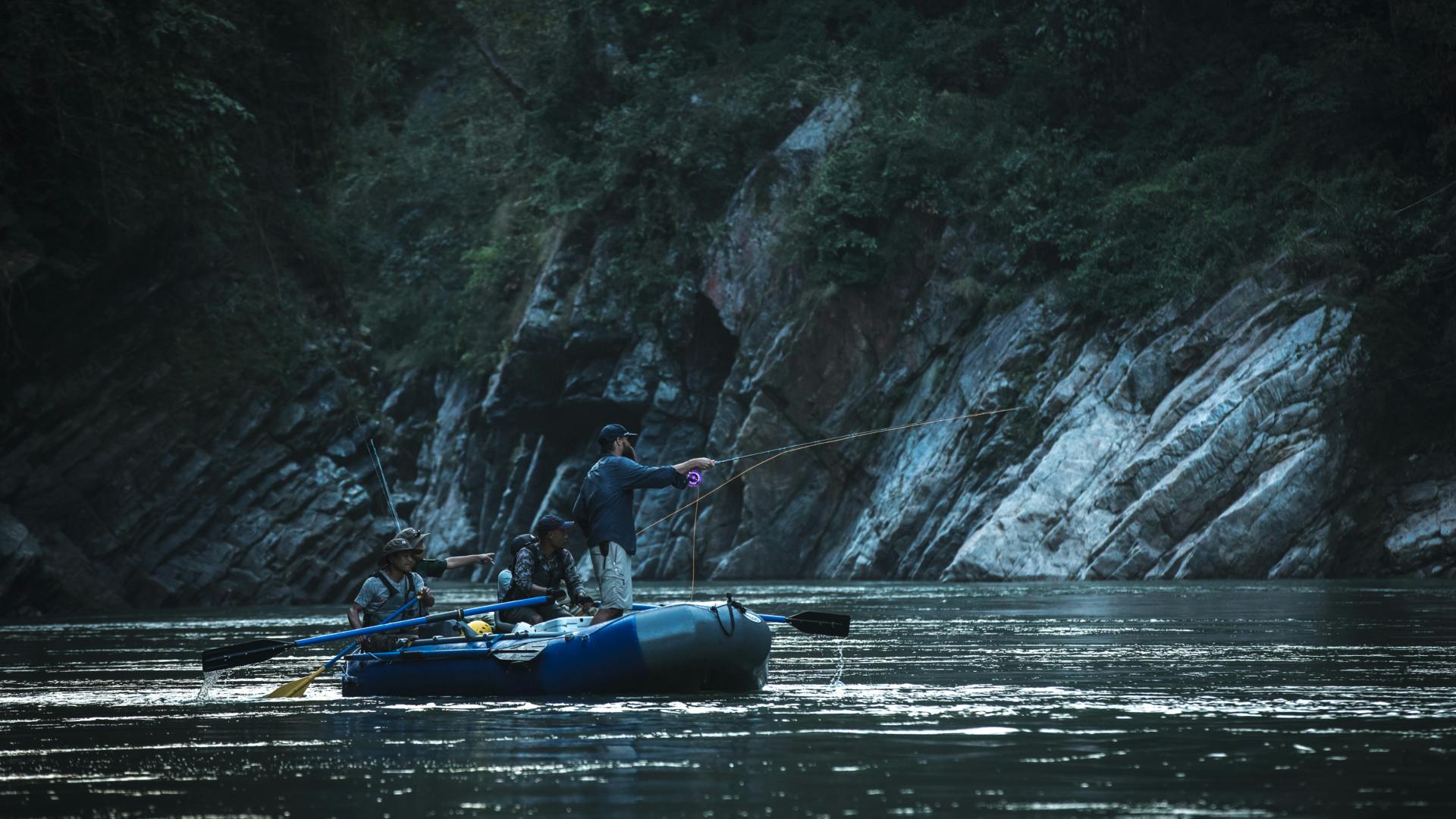
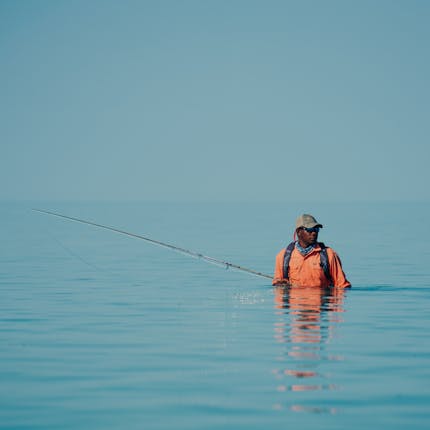
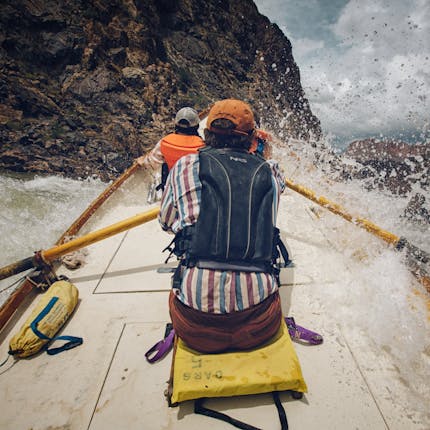
We reached the put-in the next day and met the rest of our team: a scientist; officials from Bhutan’s departments of fisheries, forests, and park services; as well as rafters and camp helpers. This army of people was there to support me — the sole angler of the enterprise. They eyed me while I eyed the river. I did not want to disappoint them.
Before we launched, Pema presented me with a generous gift, a brand-new spin rod with assorted hard plastic lures. I thanked him, explained that I couldn’t use any of it, and showed him my fly boxes. He looked through the hundreds of preening flies and frowned gravely. Finally, he pulled out a 6-inch olive Game Changer that Blane Chocklett had tied for me. Evidently that was the one. We launched and I threw streamers at the banks. Pema confirmed that golden mahseer are extremely spooky. They can hear you talk, they can hear you walk, and they can
smell you if you get in the water upstream of them. Late in the afternoon, we neared the large tributary we’d scouted from the road and pulled to shore far above the run.
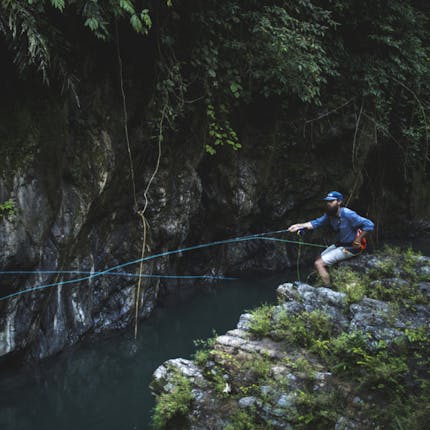
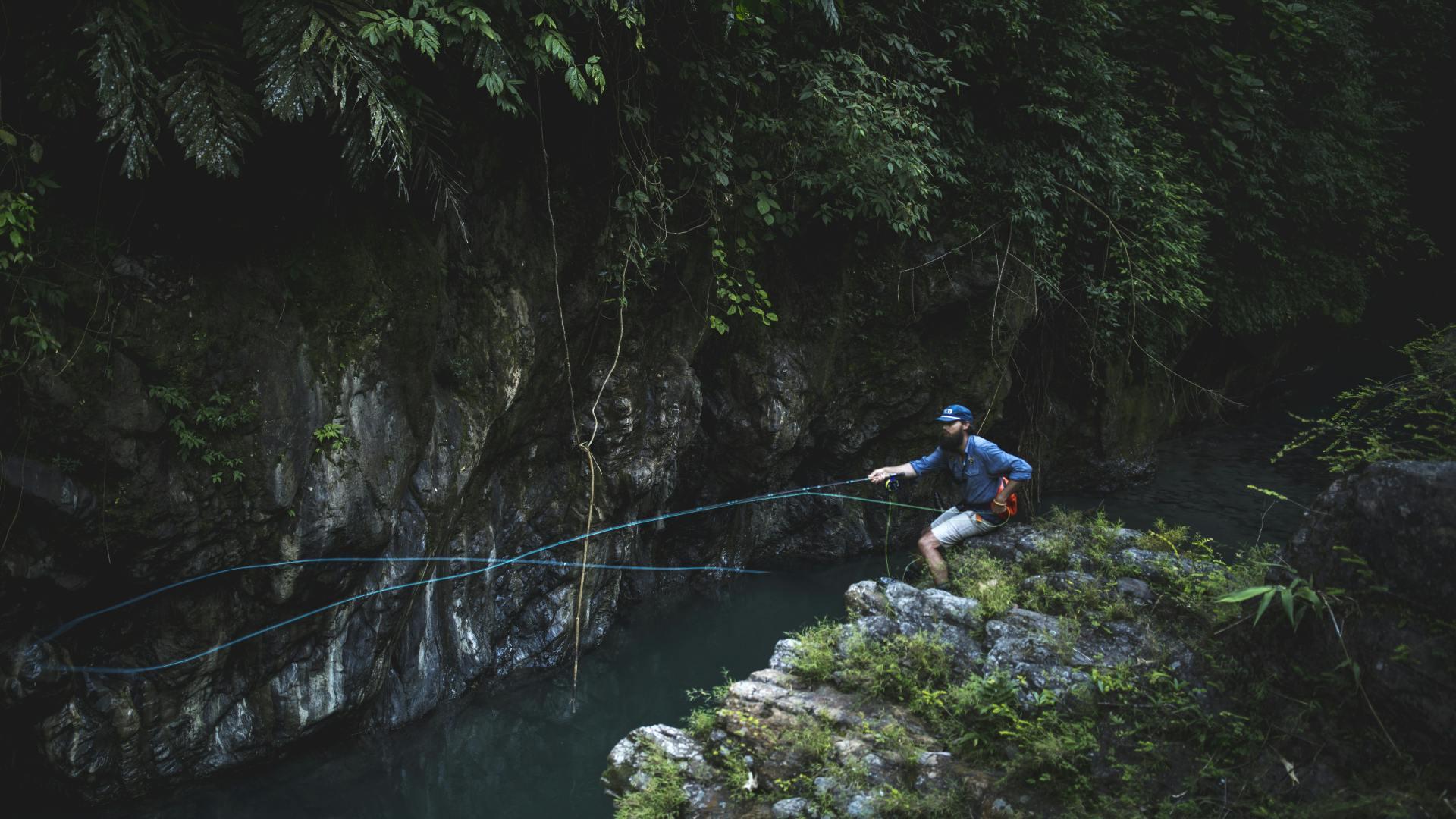
We disembarked quietly, careful not to step in the water. Needing to cross the stream to reach the confluence, we trekked hundreds of yards up into the jungle to a place where fording required just one step in the stream. With much whispering and sneaking, I got into position
and bombed a few casts to where so many fish had been the day before. Nothing. I changed my retrieve, tried mending, slowed the line to get deeper. I switched flies. Finally, I gave up and walked to the water’s edge, hoping to see a few fish.


YETI Coolers Mid Pro Flat Brim Rope Hat
Shop NowThey’d vanished. We camped near the junction pool, and I tried to sleep. In the morning I took another shot, insisting that everyone remain silent and completely out of the river corridor. I bellycrawled along the rocks and hid behind a boulder. From my knees I threw the entire line.
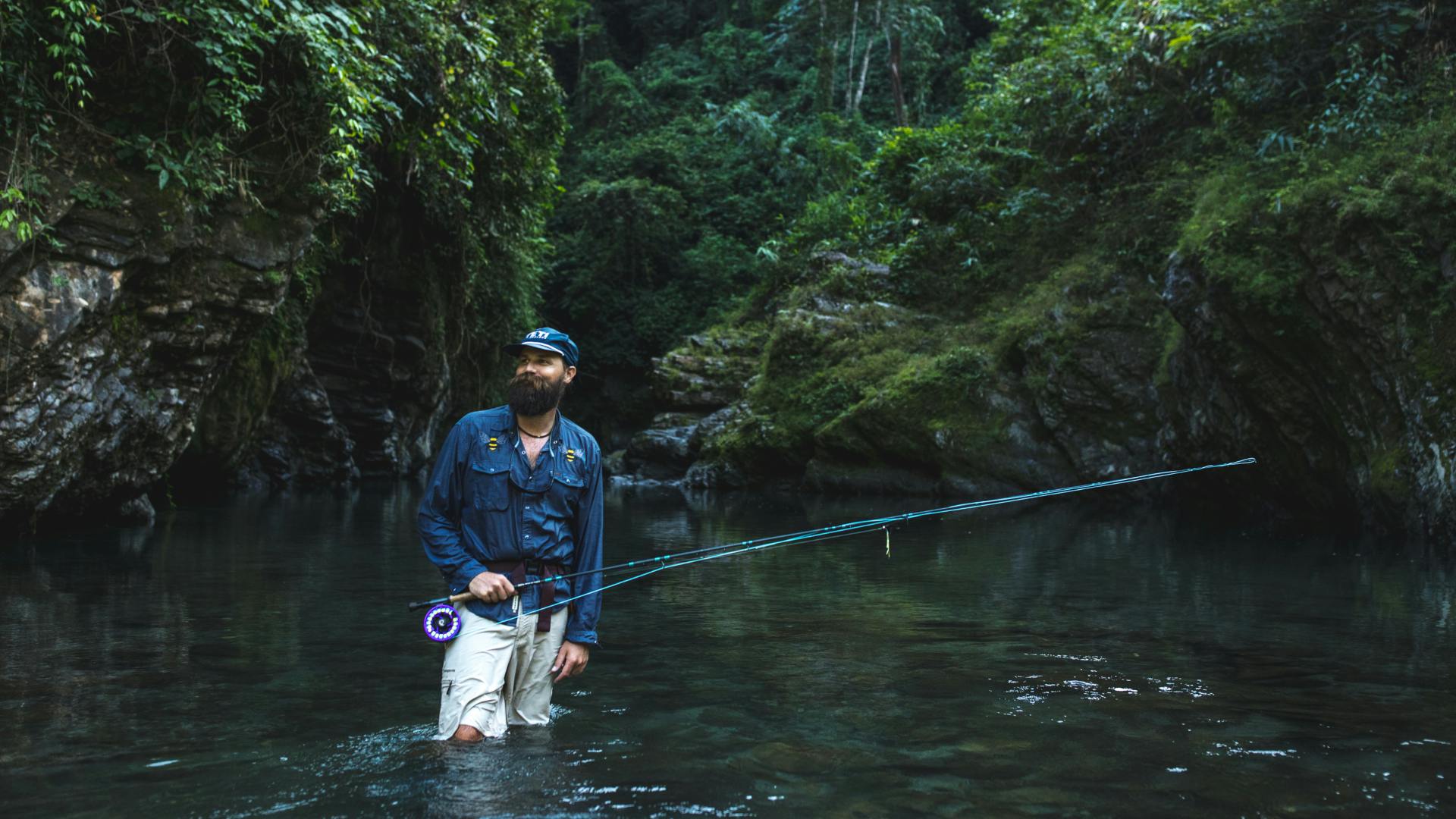
The olive Game Changer swung through the pool, and I was on!
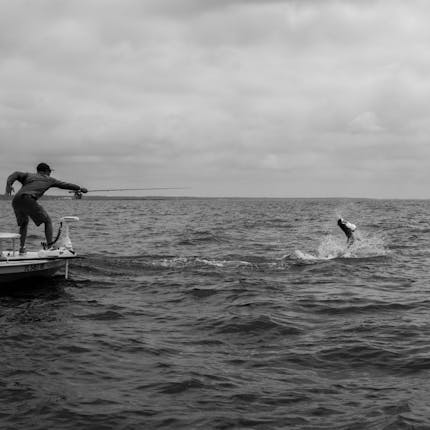
I hollered, the army filtered out to watch, and the fish came to. It was a beautiful creature, armored in gold scales with a huge mouth and a surprisingly large, powerful tail. It was the biggest mahseer any in our crew had seen taken with fly tackle, maybe somewhere around 25 pounds. We took measurements and pulled a couple of scales for the scientist.
Over the following few days, I fished like the kingdom depended on it. The water clarity meant I couldn’t see much, and without a follow or tug, there wasn’t much to go on. I cycled through all the logical fly patterns and various depths of sinking lines. I covered all the fishy-looking water and even water I’d normally ignore.
The days dragged on. I asked Pema if he wanted to fish the spinning rod. He made a few casts with a giant spoon, and within minutes he came tight. Grinning broadly, he pulled in a chocolate mahseer, the golden mahseer’s smaller cousin.
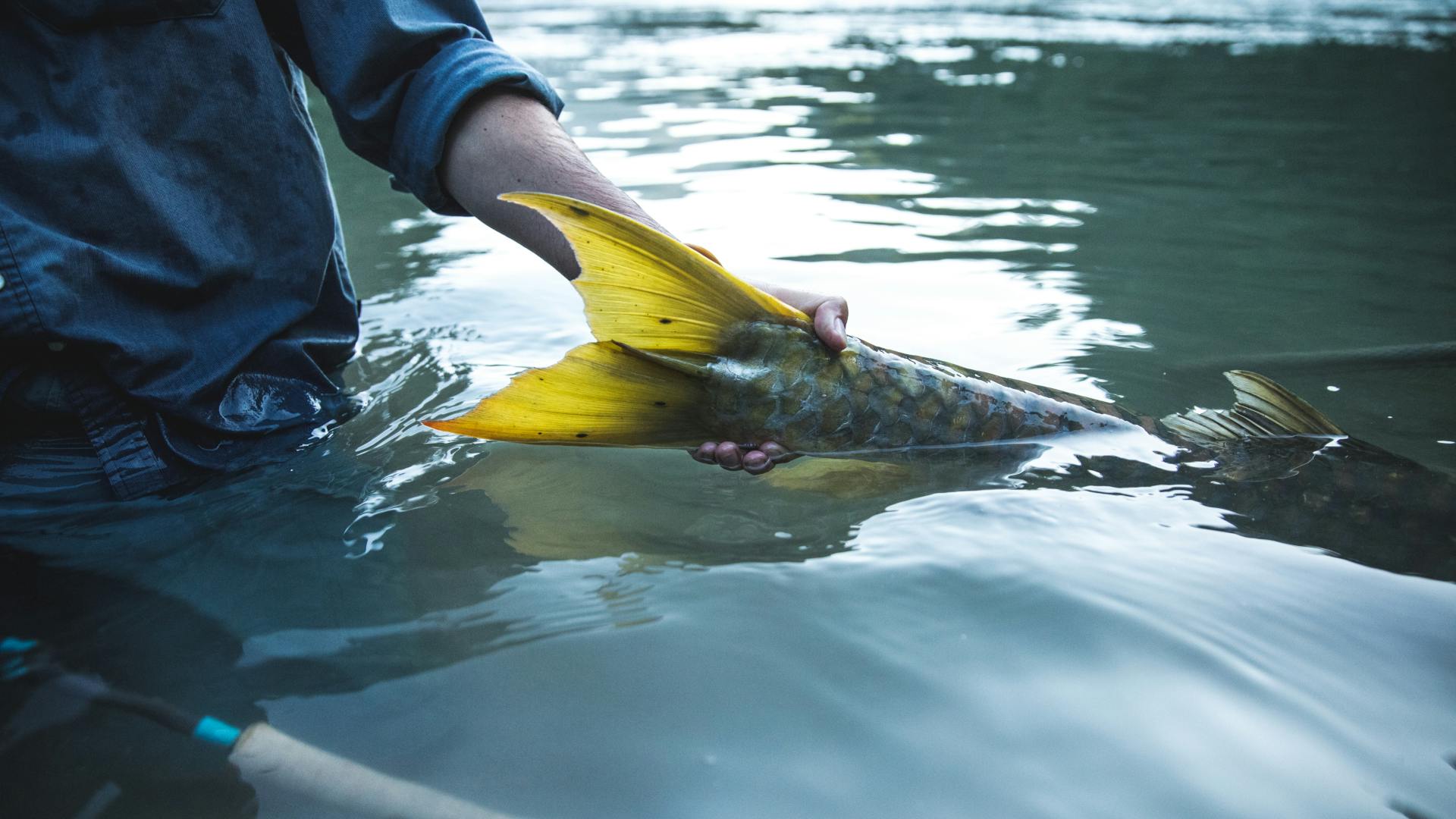
The Drangme Chhu had poured us out into the Manas River, and as the border with India drew near, that first golden felt like a distant memory. I kept casting and tossed a small streamer into a large back eddy. Suddenly my rod arched. The reel screamed into the backing as the fish hit the main current and headed downstream. This was a different creature entirely.
It took five minutes of fighting just to get my eyes on it and another 10 to get it under control enough to attempt a landing. One of the boatmen had a cradle net, and eventually we slid the great golden mahseer into it. The prehistoric monster probably weighed 35 pounds, and I could barely get my hand around its wrist. We snapped a few pictures and floated into our last night’s camp on an emotional high.
As night fell and camp grew quiet, I allowed myself to think of all the obstacles that remained. The difficult access. The cultural barriers. The sheer amount of money a dam generates compared to what fly fishing could bring.
I wondered if the math could work, if not financially, then possibly in terms of Bhutan’s happiness. Still, there were fish in that river, and there was happiness in those fish. They were worth flying halfway around the world for — that much we’d proved. And that was step one.
There’s more to Oliver White’s story. The YETI Presents film, A Thousand Casts, dives deeper into Oliver’s path from finance to fly fishing, and from the Bahamas to Bhutan.